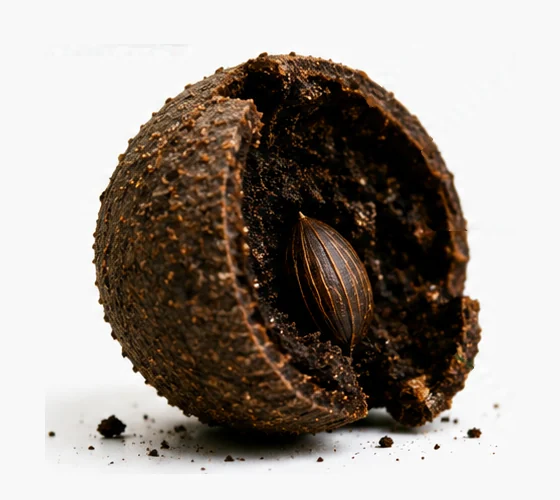
A peer-reviewed study published in July 2026 in Ecological Solutions and Evidence, a journal of the British Ecological Society, adds field evidence for capsule-based seeding. The authors are Ghassen Chaieb and Lauchlan H. Fraser of Thompson Rivers University’s Department of Natural Resource Sciences. Thompson Rivers University is a TreeTrack research partner.
What the study tested
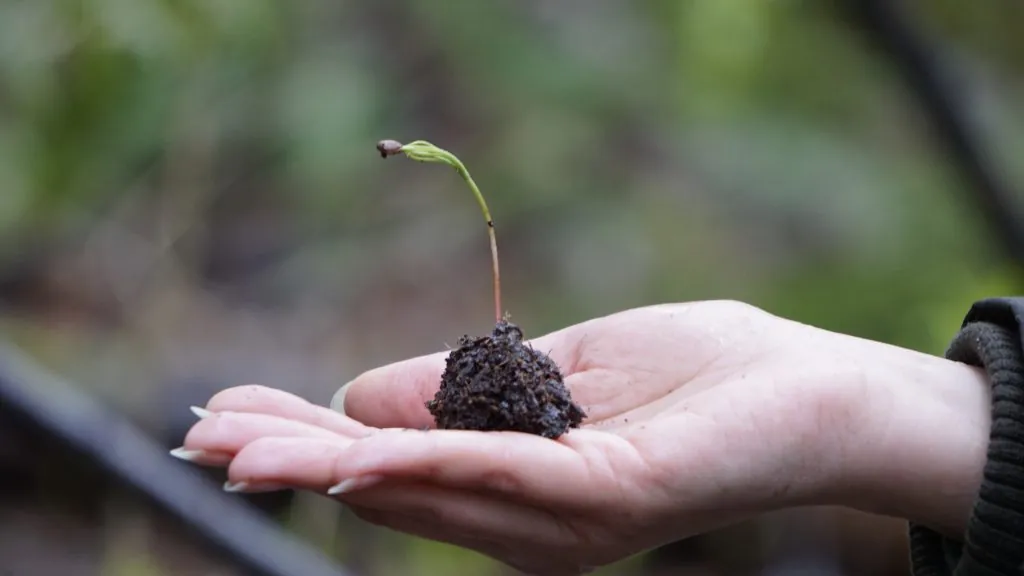
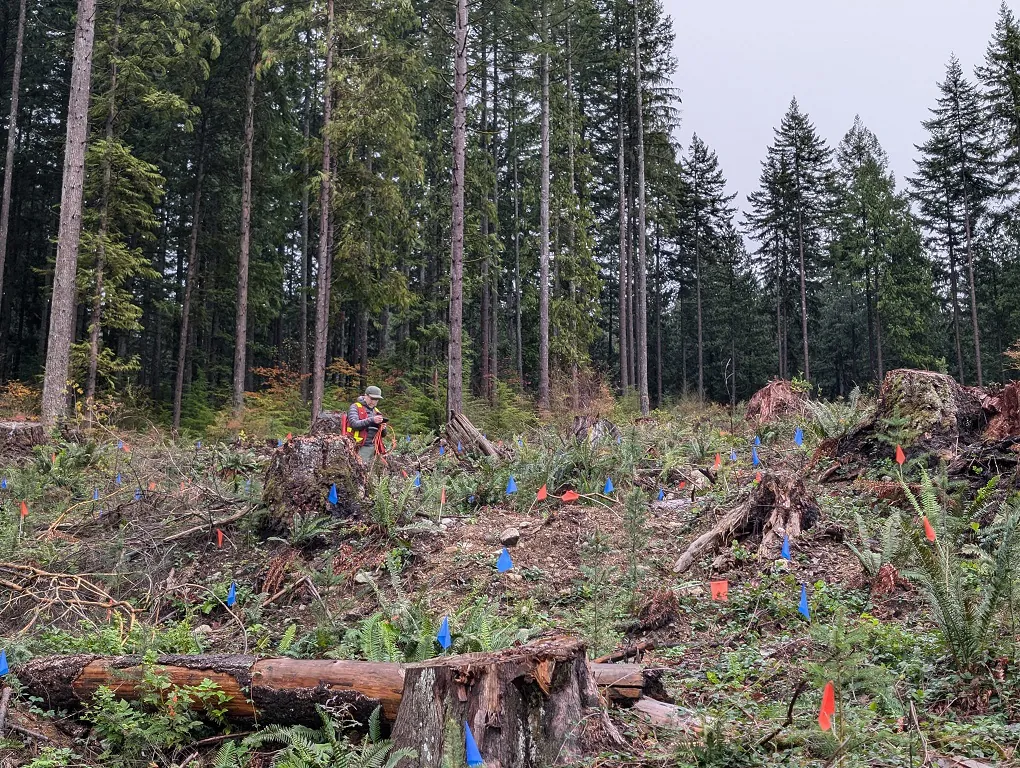
The researchers deployed 5,000 capsules across a 1.34-hectare degraded temperate forest, using two native conifers — ponderosa pine and Douglas-fir — in two formats: pelleted (coated) seeds and pods (structural delivery capsules). They tracked three outcomes separately: early emergence, survival and predation. A greenhouse trial with 3,600 seeds ran alongside.
What it found
- Pods outperformed pellets on both early emergence and survival.
- Predation was the strongest barrier. It accounted for nearly 30% of all outcomes and was the strongest negative predictor of survival.
- The field is the filter. Germination potential was high in the greenhouse across all treatments, so the losses came from field conditions.
The authors conclude that engineered capsule technologies, especially pods, can improve seedling establishment in degraded forests when ecological barriers such as predation are addressed.
Why it matters
Separating emergence, survival and predation is the same discipline TreeTrack applies to its own results — and predation is a focus of our Seedpod protection trials.
Read the paper: Seed encapsulation improves early recruitment in seed-based restoration (Chaieb & Fraser, 2026). See also our research and patents.